
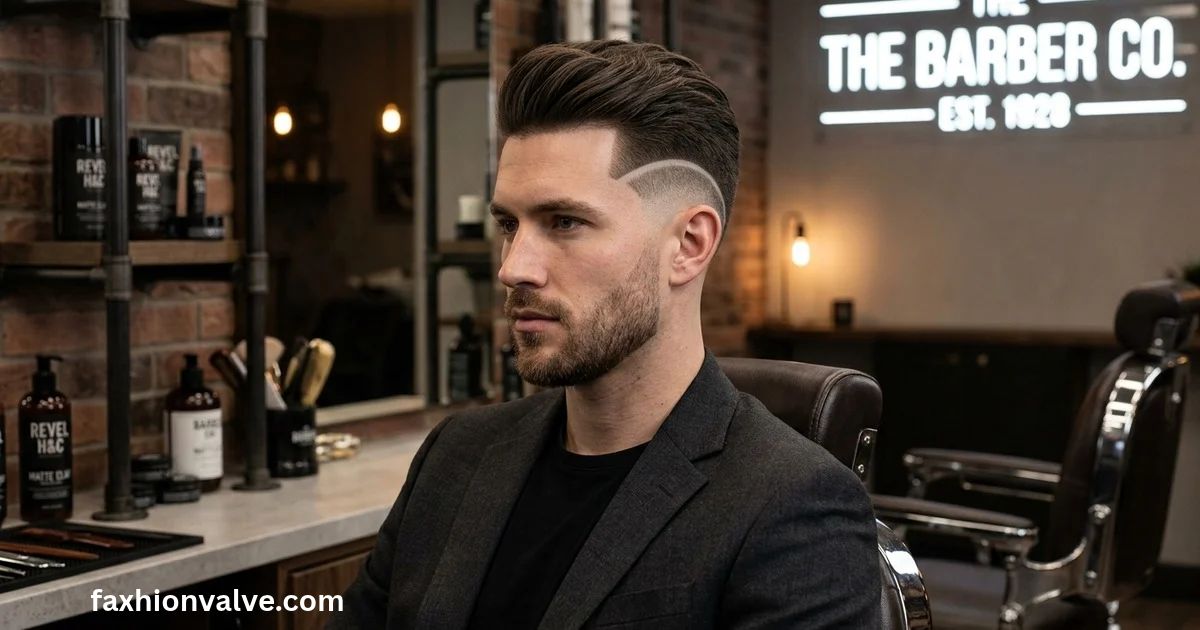
A taper low burst fade is a haircut where the sides and back shorten gradually, the blend starts low near the ear and neckline, and the hair curves in a semicircle around the ear like a small burst.
It keeps the nape softer than a skin fade and leaves plenty of length on top to style.If you have scrolled through barber photos lately, you have seen this cut everywhere.
It looks sharp on a mullet, clean on a curly top, and calm enough for an office. The trouble is that most people do not know the right words to ask for it.
What a taper low burst fade is
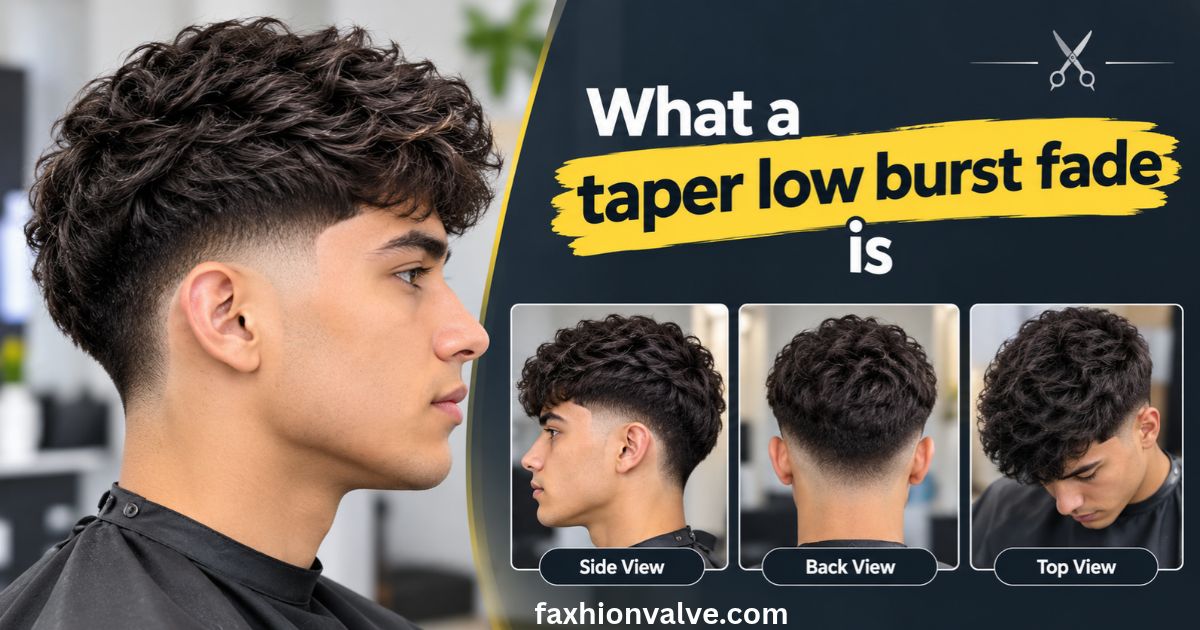
A taper low burst fade combines three ideas into one haircut:
- Taper: the hair gets shorter in small steps toward the neckline and sideburns, usually without going fully to skin.
- Low placement: the blend starts below the ear instead of high on the temple, so the cut stays subtle.
- Burst shape: the fade curves around the ear in an arc, while the hair behind it can stay longer.
Think of it as a low burst taper. The shortest areas sit around the ear and sideburn. The hair at the back of the head, called the nape, stays longer than it would in a regular fade. That contrast is what makes the shape stand out.
Barbers usually use clippers with guard sizes such as #1 (about 3 mm or 1/8 inch) or #0.5 at the shortest point, then blend up with longer guards and scissors or shears. A skilled barber finishes with a clean edge up around the hairline.
Here is a quick snapshot:
| Feature | Taper low burst fade |
| Fade start | Low, just above or around the ear |
| Shape | Curved arc around the ear |
| Nape | Longer and tapered, not shaved flat |
| Contrast | Soft to medium |
| Best top lengths | Short crop to long flow |
| Typical upkeep | Every 3 to 4 weeks |
Taper vs low fade vs burst fade

These three terms get mixed up constantly. Each one describes a different part of the haircut, which is why they can be combined.
| Cut | What it controls | Key detail |
| Taper | How gradually the hair shortens | Keeps some length at the edges |
| Low fade | Where the fade starts | Begins low near the ear and neck |
| Burst fade | The shape of the fade | Curves around the ear |
Taper
A taper is a gradual change in length. The hair on the sideburns and neckline gets shorter in soft steps, but it does not have to reach the skin.
That makes a taper more forgiving as it grows out. It also looks more natural, which is why many men choose it for work and school.
Low fade
A low fade starts the blend close to the hairline, just above the ear, and follows the natural curve of the head.
A fade can go all the way down to skin, so it usually has more contrast than a plain taper. It is a precision cut and looks best when it is fresh.
Burst fade
A burst fade is about shape. Instead of running straight across the head, the fade arcs around the ear in a semicircle.
The hair behind the arc stays longer, which is why burst fades pair so well with mullets, mohawks, and curly tops. You can ask for a low, mid, or high burst. The “low” version keeps the arc small and close to the ear.
Put them together and you get the taper low burst fade: soft like a taper, low like a low fade, and curved like a burst.
Who a taper low burst fade suits
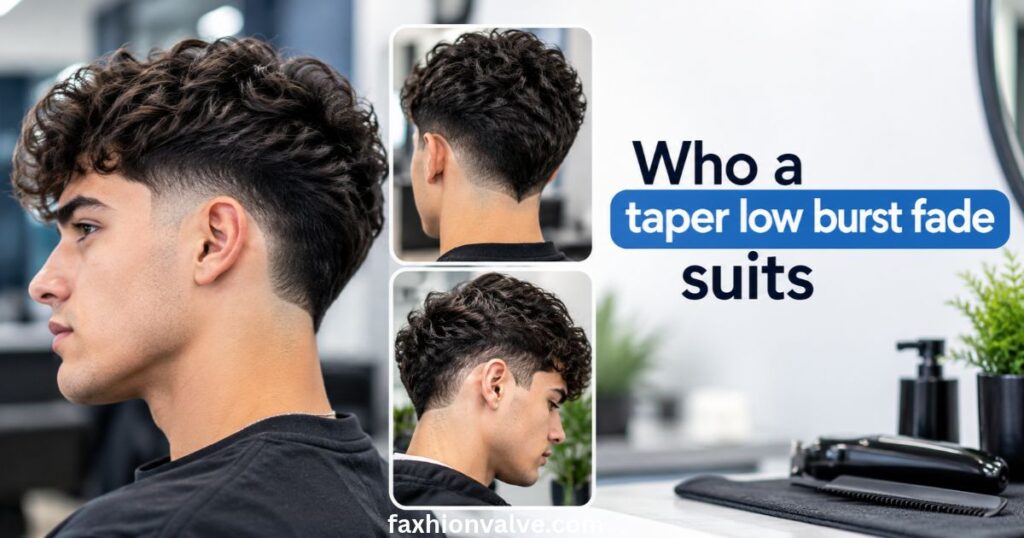
This cut is flexible, but a few details make it work better on some heads than others.
Face shapes
- Oval: Almost anything works. The cut keeps your balanced proportions.
- Round: Keep some height on top, such as a quiff or textured crop. The low sides stop the face from looking wider.
- Square: A soft taper around the ears balances a strong jawline. Pair it with a slightly longer top.
- Oblong or long: Avoid too much height. Choose a fringe or a flatter, textured top so the face does not look longer.
- Heart or diamond: A fuller top with a low burst keeps the cheekbones and chin in balance.
Hair types
- Straight hair: The burst shows up clearly. Use texture products so the top does not fall flat.
- Wavy hair: This is a great match. Waves add movement over the clean sides.
- Curly and coily hair: The contrast between a defined curl pattern and a tight fade looks excellent. Ask your barber to follow your natural growth direction.
- Thick hair: Ask for a bit of thinning on top so the shape does not get heavy.
- Fine or thinning hair: Keep the burst small and the top short to medium. Too much contrast can make thin areas look more noticeable.
- Receding hairline: A low, soft taper often looks better than a high skin fade. Talk through the temples with your barber first.
Best styles to ask for

Here are seven looks that work well with a taper low burst fade:
- Textured crop: A short, messy top with a clean burst on the sides. Easy to style and great for busy mornings.
- Curly top: Medium length curls on top with a tight low burst. It highlights your curl pattern.
- Mullet: The burst fade mullet is the most popular pairing. The longer back flows from the arc behind the ear.
- Mohawk or faux hawk: The burst curves around the ear and the centre stays tall. Bold, but still clean.
- Quiff: Hair brushed up and back at the front. This gives height and a classic shape.
- Side part or comb over: A neat part with a low burst gives you a sharp, work friendly look.
- Long flow or curtains: Longer hair on top with tidy sides keeps the style modern and controlled.
If you are unsure where to start, pick the textured crop or the side part. Both are easy to grow out and easy to fix at a different barber.
How to ask your barber for it
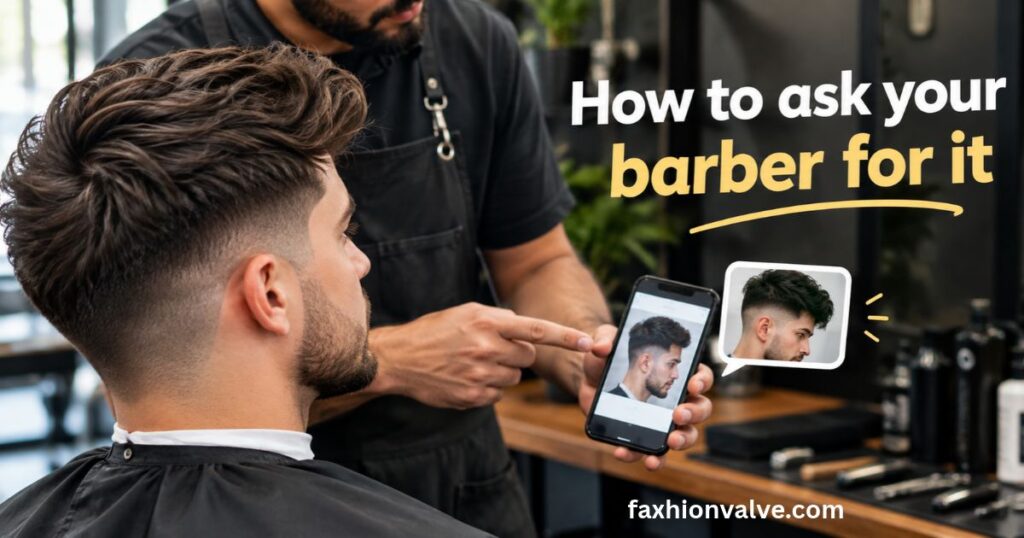
Burst fades need precision, so clear communication saves you from a cut you did not want. The right words matter more than any product.
A script that works
Try saying something like this:
“I’d like a low burst taper. Start the fade low, curve it around the ear, and keep the neckline natural and tapered. Take the shortest part down to a #1, and leave about three inches on top.”
You can also follow this simple order:
- Name the cut: “low burst taper.”
- Say how low or high the burst should start.
- Say whether you want skin or a #1 or #0.5 at the shortest point.
- Ask for a natural or squared neckline.
- Give the length you want on top and how you part it.
Always tell your barber how high the burst should go. That one detail changes the whole look.
What to show
- Photos from three angles: front, side, and back. The side view matters most for a burst.
- A photo of your hair type: a reference with similar texture avoids surprises.
- Your current length: say it in inches or centimetres rather than “a bit shorter.”
- Your daily routine: tell your barber if you style your hair or just wash and go.
A good barber will also tell you honestly if the photo will not work on your hair or hairline. Listen to that advice.
Keeping a taper low burst fade sharp
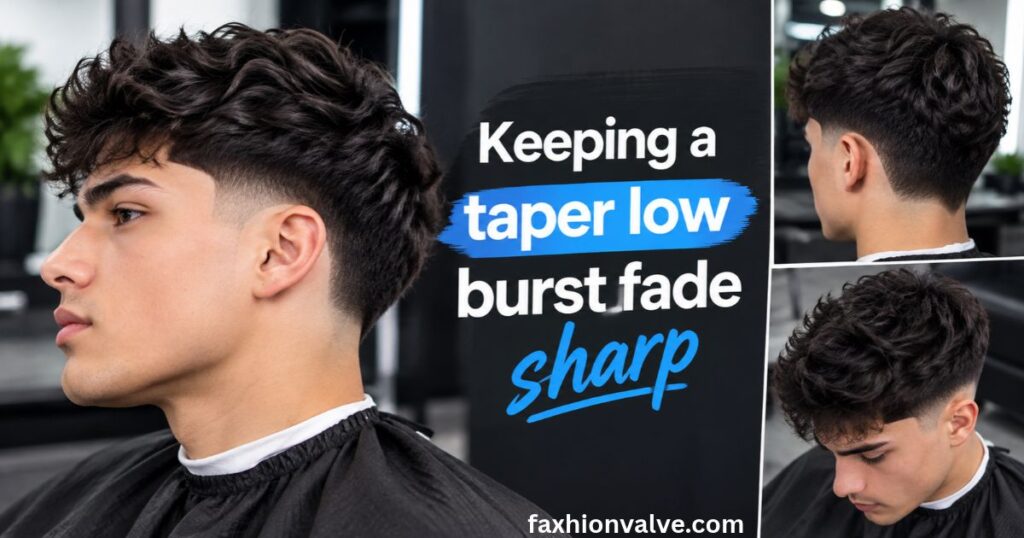
Contrast fades quickly. Hair grows about half an inch (roughly 1.25 cm) each month, and the soft blend around the ear is the first part to lose its shape.
Touch-up timeline
| Time since cut | What you will see | What to do |
| Week 1 to 2 | Sharpest look, clean arc | Enjoy it |
| Week 2 to 3 | Blend softens, neckline fuzzes | Book a quick tidy if you want it crisp |
| Week 3 to 4 | Burst shape starts to blur | Best window for a refresh |
| Week 5 to 6 | Taper has grown out | Full cut needed |
If you want the burst very sharp, plan a visit every 2 to 3 weeks. If you prefer a lived in look, 4 weeks is usually fine. Ask your barber about a short “fade only” appointment, since many shops offer one at a lower price.
Neckline and sideburn cleanup
The neckline and sideburns decide how clean the whole cut looks. A few simple rules:
- Ask for a tapered neckline. A squared or blocked neckline grows out messy and shows every extra day.
- Match your sideburns to the nape. If the sideburns are low and tight, the nape should be too.
- Use a trimmer for stray hairs only. Clean the loose hairs below the neckline, but do not cut into the fade.
- Leave the arc to your barber. Home clippers can easily flatten the burst shape.
Mistakes that ruin the cut
Most bad fades come from a handful of common mistakes:
- Starting the burst too high. A high burst on a low request makes the cut look harsh.
- Skipping reference photos. Words like “fade” mean different things to different barbers.
- Going too short on top. The burst needs some length behind it to show off the shape.
- Choosing the wrong guard. A skin fade on thin hair can expose the scalp more than you expect.
- Squaring the neckline. It looks neat for a few days and then grows out badly.
- Ignoring hair direction. Curls and cowlicks need a barber who cuts with the growth, not against it.
- Waiting too long for a touch up. The fade loses its shape long before the top does.
- Using too much product. Heavy gel can weigh down the top and hide the contrast.
Styling it at home

You do not need a complicated routine. Here is a simple method that works for most hair types:
- Start with clean hair. Wash and gently towel dry so the hair is damp, not dripping.
- Use a blow dryer. Dry the top in the direction you want it to sit. This is where the style is built.
- Pick a product for your texture.
- Matte clay or paste for straight or wavy hair
- Sea salt spray for extra grip and texture
- Curl cream or light gel for curly and coily hair
- Apply a small amount. Rub the product between your palms, then work it from roots to tips.
- Shape and set. Use your fingers or a comb. Finish with a light hold spray if you need it.
Sleep tip: for curls, a satin pillowcase or bonnet helps keep your texture and prevents flat spots on the sides.
Taper low burst fade vs blowout taper

These two cuts are cousins, but they focus on different parts of the head.
| Feature | Taper low burst fade | Blowout taper |
| Focus | The shape of the sides | The volume on top |
| Key feature | Curved arc around the ear | Voluminous, swept up top |
| Styling | Texture, clay, or curls | Blow dryer and hold product |
| Top length | Short to long | Usually medium to long |
| Can they be combined? | Yes | Yes |
A blowout taper describes a longer, voluminous top paired with tapered sides. A burst describes the curved shape of the fade. You can ask for both: a blowout on top with a low burst taper on the sides.
If you want a quick job in the morning, the burst fade with a textured top is easier. If you like a fuller, styled look, the blowout version takes more time but gives more height.
Is it okay for school, work, or formal settings?

Yes, in most cases. A taper low burst fade can look professional because the contrast is soft and the nape stays natural. Here is how to keep it appropriate:
- For school: Choose a low burst with a #1 or #2 guard rather than skin. Keep the top neat and out of the eyes.
- For work: Pair it with a side part or a short textured crop. Use a matte product so the hair looks clean, not shiny.
- For formal events: Ask for a tidy neckline and a combed top. A fresh cut a few days before the event works best.
- Strict dress codes: Some schools, workplaces, and military settings set limits on contrast and length. Check the rules before booking a bold version.
If you are not sure, start with the lowest and softest version. You can always go shorter next time.
Final take
The taper low burst fade works because it mixes subtle and stylish. It gives you a clean shape around the ear, a natural neckline, and the freedom to wear almost any top style.
Choose the burst height that fits your face and hair, bring photos from several angles, and book a touch up every 3 to 4 weeks. With the right barber and a clear script, this cut is easy to love and easy to maintain.
Frequently Asked Questions
What is a taper low burst fade?
It is a haircut with a low, gradual taper that curves around the ear in a burst shape. The nape stays longer and the top can be any length.
Is a burst fade the same as a taper fade?
No. A taper describes how gradually the hair shortens, while a burst describes the curved shape around the ear. They are often combined.
How do I ask my barber for a taper low burst fade?
Say “low burst taper,” then add where the fade starts, your shortest guard, and your top length. Bring front, side, and back photos.
How often should I get a touch up?
Every 2 to 3 weeks keeps the burst sharp, while 3 to 4 weeks works for a softer look. A full cut is needed around week 5 or 6.
Does a taper low burst fade work on curly hair?
Yes. The tight sides make curls stand out. Ask your barber to follow your natural growth direction.
Is a taper low burst fade good for thin hair?
It can be, if you keep the contrast soft and the top short to medium. Avoid a skin fade if the scalp shows through easily.
Can I get this cut with a mullet?
Yes. The burst fade mullet is one of the most popular combinations. The longer back flows naturally from the curve behind the ear.
Is a taper low burst fade professional enough for work?
Yes, when the contrast is low and the neckline is natural. A side part or a short textured top makes it look more formal.

Theo Grant is a hairstyle writer and content creator at Faxhion Valve, sharing practical insights on haircuts, styling ideas, and evolving hair trends. His approach focuses on clear research, useful guidance, and accessible information, helping readers explore hairstyles, understand styling options, and discover inspiration for their personal look.